Palah Biswas On Unique Identity No1.mpg

Unique Identity No2

Please send the LINK to your Addresslist and send me every update, event, development,documents and FEEDBACK . just mail to palashbiswaskl@gmail.com

Website templates

Zia clarifies his timing of declaration of independence

what mujib said

Jyothi Basu Is Dead

Unflinching Left firm on nuke deal

Jyoti Basu's Address on the Lok Sabha Elections 2009

Basu expresses shock over poll debacle

Jyoti Basu: The Pragmatist

Dr.BR Ambedkar

Memories of Another day

Memories of Another day
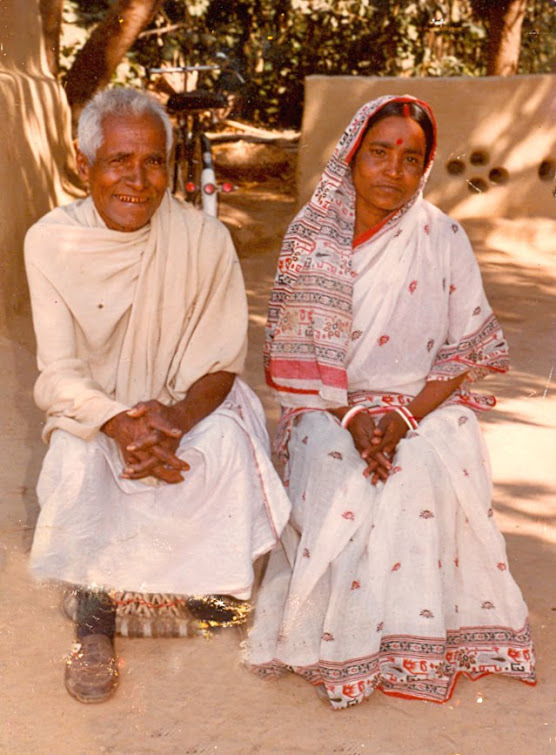
While my Parents Pulin Babu and basanti Devi were living

"The Day India Burned"--A Documentary On Partition Part-1/9

Partition

Partition of India - refugees displaced by the partition

Monday, March 1, 2010

Fwd: [PMARC] Dalits Media Watch - News Updates 28.02.10


---------- Forwarded message ----------
From: Peoples Media Advocacy & Resource Centre-PMARC <pmarc2008@gmail.com>
Date: Sun, Feb 28, 2010 at 9:37 PM
Subject: [PMARC] Dalits Media Watch - News Updates 28.02.10
To: Dalits Media Watch <PMARC@dgroups.org>


Dalits Media Watch

News Updates 28.02.10

Sreelatha Menon: The dalit treasure hunt - The Business Stanard

http://www.business-standard.com/india/news/sreelatha-menondalit-treasure-hunt/387073/

Dalits have no burial ground - The Hindu

http://www.hindu.com/2010/02/28/stories/2010022859540300.htm

Budget silent on Plan outlay for SC/STs - The Economics Times

http://economictimes.indiatimes.com/features/the-sunday-et/dateline-india/Budget-silent-on-Plan-outlay-for-SC/STs/articleshow/5625970.cms

A world of difference - Express Buzz

http://www.expressbuzz.com/edition/story.aspx?Title=A++world+of+difference&artid=nA6reJtiGvA=&SectionID=41ptteGX1Qw=&MainSectionID=41ptteGX1Qw=&SEO=novels+,+Dalit,+untouchable,+Jaipur+Literature+Fes&SectionName=42QPdTRt8sE

The Business Stanard

Sreelatha Menon: The dalit treasure hunt

http://www.business-standard.com/india/news/sreelatha-menondalit-treasure-hunt/387073/

The social justice and empowerment ministry is linking dalit research with dalit activism, which may some day lead to celebration of dalitism

Sreelatha Menon

New Delhi February 28, 2010, 0:42 IST

There is no end to the variety of demons that the mind can engender. The feeling of hatred or fear based on one's position in the caste hierarchy is only one of them.

In a Madurai village, some people recently went to the extent of building a wall so that they are saved the "impure'' sight of dalits living in the other part of the village.

In north Indian villages, a Harijan basti is a common sight. Caste-based discrimination is a mental illness, a virus that hits the brain, as Dr A Rosaiah of Tata Institute of Social Sciences Mumbai puts it.

In this lunacy, all institutions become suspect. Recently, the social justice ministry's Ambedkar Chair at Indian Institute of Public Administration (IIPA) and Pria, a non-government organisation, organised a workshop on dalit leadership in panchayats. At the event, activists pointed fingers at the panchayati raj system itself.

Is panchayati raj the right way to go? Is it right just because Mahatma Gandhi recommended it? It was something BR Ambedkar, known as the father of the Constitution, was against. He felt it could not work in a caste-ridden society.

There are so many cases of dalit panchayat presidents acting as rubber stamps, of panchayat presidents being forced to sit on the floor, of being forced to wash their chairs at the time of leaving.

Today, if a dalit becomes a panchayat president, he becomes the worst enemy of his community, says Paul Diwakar, who heads the National Campaign for Dalit Human Rights. The reason is that he is chosen by the upper caste leaders of the community. So, he acts in the interests of his "masters," leaving the dalits feeling betrayed.

This proves right the thesis of dalit leaders that India got freedom from external masters but continued to be a slave of internal masters.

There had to be a cultural revolution, Ambedkar had said, to reverse the hierarchical system. How can dalits get their due?

Quotas are like a balm. But a balm is not enough, for there are fresh wounds every day.

Five years ago, Arun Khote, a dalit activist, started an online news magazine to document atrocities on dalits. It goes to almost everyone who matters in the country. Yet, the country doesn't recognise the apartheid that is being played out in the name of democracy.

Just shedding tears about these atrocities is not enough. There has to be a celebration of the wealth that the community stands for. The wealth of its tradition and history needs to be studied.

The social justice and empowerment ministry's Budget allocation has seen a huge jump in this Budget. It beats both the National Employment Guarantee Scheme and the government's education and health programmes.

The Ambedkar Foundation under the ministry has already made a beginning by setting up ten research chairs in ten different states. In New Delhi, the IIPA conference brought together researchers and dalit organisations. This will lead to more information on dalit culture, where seeds of a cultural revolution lie. Khote is talking about dalit festivals, dalit music. It's a new beginning to kill the virus of hatred.

The Hindu

Dalits have no burial ground

http://www.hindu.com/2010/02/28/stories/2010022859540300.htm

MANGALORE: When a Dalit dies in Ambedkar Nagar Colony in Malavaru Gram Panchayat, the family members are forced to seek some place from 'caste' Hindus in the neighbourhood for cremation.

"Sometimes the 'caste' Hindus oblige but we have been refused space for cremation several times," said M. Bhaskar, a resident of the colony.

He said there was a crematorium at Kenjar, around 1.5 km away. "But it is controlled by Bunt and Billava communities."

Dalits have been going through this humiliating experience since 2005 when the local cremation ground was acquired for the expansion of the Bajpe airport. On Wednesday, when Gulabi (45) died of cancer, the members of the community decided to put an end to this ordeal. They stormed the Malavaru Gram Panchayat office around 9.30 a.m. and started preparing the ground to cremate Gulabi's remains right in front of the office.

Tahsildar Ravichandra Naik, who arrived there finallysummoned the surveyor, who set off to find a government land for crematorium.

He returned around an hour later only to state that a land was available near a Hindu temple, but the temple committee would not allow it to be used as a crematorium.

The Economics Times

Budget silent on Plan outlay for SC/STs

http://economictimes.indiatimes.com/features/the-sunday-et/dateline-india/Budget-silent-on-Plan-outlay-for-SC/STs/articleshow/5625970.cms

NEW DELHI: What is the budgetary outlay for the welfare of Scheduled Castes and Tribes? The answer is not immediately apparent to a lay reader of

the Budget documents. For a government and a political leadership trying to establish its pro-Dalit credentials, this kind of sloppy accounting is quite surprising.

Dalit leader and Indian Justice Party president Udit Raj, for example, has demanded that the government increase the outlay for the ministry of social justice and empowerment from the Rs 4,500 crore allocated in the Budget, to Rs 61,187 crore, the share of the total Plan expenditure that corresponds with the share of Scheduled Castes in the population. While conceding that outlays of other ministries would also include the special component outlays meant for Dalits, the sheer lack of accounting transparency in this regard has led him to conclude that the government is unlikely to have allocated more than 5% of the total Plan expenditure to Scheduled Caste welfare and development.

The government now undertakes gender budgeting. A question that arises from Mr Raj's demand is whether the government should not create an accounting framework that makes it clear how much of the taxpayers money actually goes to improve the lives of the subaltern sections of society that the government and the political class seek to uplift.

Express Buzz


A world of difference

http://www.expressbuzz.com/edition/story.aspx?Title=A++world+of+difference&artid=nA6reJtiGvA=&SectionID=41ptteGX1Qw=&MainSectionID=41ptteGX1Qw=&SEO=novels+,+Dalit,+untouchable,+Jaipur+Literature+Fes&SectionName=42QPdTRt8sE=

Ranjitha Gunasekaran

Last Updated : 27 Feb 2010 11:51:41 PM IST

Desraj Kali puts it like this. "There is a writer at this festival who like me is from Jalandhar. We have both written novels set in a particular period of Punjab's history. There was a king and in his employ, among others, were a group of flour grinders. They were untouchables, their salary for a long day's work was one meal. Now, this writer comes from a higher caste and he has written about the king and his court. I am a Dalit, my novel is about those untouchables. That is the difference in perspective."

Kali, whose humour transcends linguistic barriers, is a prolific writer in the Punjabi. His take on what sets Dalit writing apart came in conversation on a chilly January evening at the Jaipur Literature Festival. The festival's focus this year was on Dalit writing (though the sessions themselves were titled the "Bhaskar Bhasha" series) and Kali was among eight other luminaries who are little known beyond their region and rarely translated or recognised.

Kali, in fact, was meeting another prolific writer for the first time at the festival. The Delhi-based Ajay Navaria teaches at Jamia Milia Islamia and writes in Hindi. He too is Dalit.

"The spirit behind our writing, literature is the same. They are related to Dalit ideologies, our struggles. Only the creative translations of that are affected by the cultural regions we come from," Navaria explains. The Assistant Professor from Jamia Milia Islamia writes about the experience of the middle class urban Dalit, unlike Kali whose work involves narrative accounts gathered from rural Punjab. But Navaria points out, "There is a grey area of atrocities and untouchability even in a city." He gives examples. "For instance, at lunchtime at work, when you open your tiffin box, your colleagues who share everyone else's food, avoid touching yours. When that happened, I stopped taking food from them either." His wife experienced something similar while she was completing her graduation. "Her classmates stopped sharing her food when they found she was Dalit."

"There appears to be a natural hatred in the minds of some people, which may come from they training they receive in their families, these things become part of the culture," he says, at the same time stressing that his position teaching Hindu Ethics is a triumph of democracy and modernisation. "You couldn't even imagine something like that 15-20 years ago."

For Kali, the treatment the writers received at the festival itself seemed unimaginable — the mainstream literary bodies in India have never honoured them in this manner. "This is the first time we are receiving so much love and honour from readers and other writers," he says, excitedly listing his favourite authors that he got to meet, such as Girish Karnad. His works have looked at various kinds of marginalised peoples. For instance, in Thumri, he focused on the Dalit musicians who had been protected by the Mughals. "They enriched their music and made it very rich but after the Mughals, their contributions were sidelined by the hegemony of Sikhism," he says, adding that ultimately English is the medium you need to know to be able to sell your books.

Kali and Navaria also met the legendary Laxman Gaikwad, a Maharashtrian writer belonging to a De Notified Tribe, whose work both had been reading for the past 20 years. Gaikwad, who says he became a writer purely out of hunger, adds a few more dimensions to the debate: firstly on neo-brahminism — how a Dalit becomes successful and then chooses to cut himself off from his community, secondly on why there was never any debate on ending casteism itself. "I am the only one from my family who went to school. I became a writer on my own because of hunger. That is why while anyone can write about Dalits, our writing is the most powerful."

P Sivakami is in the unique position of one who can relate to both the rural and urban experiences of a Dalit. "I grew up in a small village and was later sent to hostel because I was a good student," she smiles. But she recalls how as a young girl, when she went to her friend's house and tried to drink from the well, the friend's grandmother tried to bar her entry because she was Dalit.

"At that time it didn't matter because my friend was important to me and she stood up for me. Later, when I grew older, these things hurt," the former IAS officer says. Indeed Sivakami, who has been writing from the '80s was initially wary of being called a Dalit writer, but later accepted it. More difficult to accept was the subtle discrimination she faced in her career as a civil servant. "I was put in charge of the Tamil Nadu Adi Dravidar Welfare Board, but many of my suggestions or inputs were brushed aside as being communal," she recalls. "I didn't ask to be put in that department but my work was always viewed through the prism of my caste," she sighs.

Her children, however, faced little discrimination. "In fact no one in their school bothered about caste until their Class X board exams when they had to produce a caste certificate. Their friends could not believe they were Dalit, because they didn't look like Dalits, whatever that means," she laughed.

Today, Sivakami has plunged into politics. "I don't think there is adequate representation for the community so though we have no funds, we are forging ahead," she says.


--
.Arun Khote
On behalf of
Dalits Media Watch Team
(An initiative of "Peoples Media Advocacy & Resource Centre-PMARC")
..................................................................
Peoples Media Advocacy & Resource Centre- PMARC has been initiated with the support from group of senior journalists, social activists, academics and intellectuals from Dalit and civil society to advocate and facilitate Dalits issues in the mainstream media. To create proper & adequate space with the Dalit perspective in the mainstream media national/ International on Dalit issues is primary objective of the PMARC.

Visit web site | Reply to sender | Click here to unsubscribe
The email is intended only for the recipients. The owners of the Dgroups cannot be held responsible for the contents of the email message.


Fwd: [bangla-vision] MTT Newsletter:141 - Sunday, February 28, 2010.


---------- Forwarded message ----------
From: Saj <SAJJAD_PAK@hotmail.com>
Date: Sun, Feb 28, 2010 at 10:51 PM
Subject: [bangla-vision] MTT Newsletter:141 - Sunday, February 28, 2010.
To: NoReply@markthetruth.com


Please forward this Newsletter to your friends and family members too.
These articles are only to read, not to copy and publish in your sites without providing a reference back to our website.
 
 
Despite the continued employment of various methods of state terrorism on the freedom fighters and the innocent protesters in the occupied Kashmir, Indian armed forces have been demoralised in crushing the war of liberation.
 
In the Indian-held Kashmir, since 1947, Indian military troops have been using barbaric tactics of extra-judicial killings, burning the houses, torture etc. to suppress the genuine freedom movement of the Kashmiris. Last year, discovery of nearly 1000 graves of the unmarked Muslims in the Indian-held Kashmir showed another evidence of Indian military terrorism. Recently, more such graves have been discovered. Reports suggest that these Muslims were tortured to deaths by the Indian army during custody.
 
 
More Articles.


http://www.markthetruth.com/china/322-will-usa-succeed-in-containing-china.html


____________
 
When you start, you never stop. If you stop, you may never be able to start again.
 
Sajjad Ahmad
 
Freelance Writer & Researcher
Rawalpindi, Pakistan
 
Emails:
sajjad_pak@hotmail.com
sajjadahmad@markthetruth.com
 
WebSite:
http://www.markthetruth.com
__._,_.___


--
Palash Biswas
Pl Read:
http://nandigramunited-banga.blogspot.com/

Fwd: MY 60th OPEN MESSAGE TO ALL PEOPLE OF GOOD WILL


---------- Forwarded message ----------
From: ben.merhav@gmail.com <ben.merhav@gmail.com>
Date: Mon, Mar 1, 2010 at 10:40 AM
Subject: MY 60th OPEN MESSAGE TO ALL PEOPLE OF GOOD WILL
To: bob@sourcewatch.org


http://zionisttorture.blogspot.com/
MY 60th OPEN MESSAGE TO ALL PEOPLE OF GOOD WILL


This is my 201st post on my autobiography weblogs protesting the zionist Gestapo's ongoing torture of myself by sleep deprivation, and the ongoing psychiatric torture of my daughter and of my son, all here in Australia.

There has not been any response from any of the Palestinians to our torture, nor to my 15 months of calls for protests against these terrorist zionist tortures. It is a hostile silence which ignores our plight, encourages more zionist terrorism against other supporters of the Palestine cause, and is detrimental to that cause in many other ways.

Obviously, with every passing day of Palestinian betrayal of my daughter, of my son and of myself to the zionist Gestapo; and with every passing day of the zionist Gestapo's ongoing deadly torture of us; and with every passing day of treachery by Raji Sourani and his cronies the Palestinian cause is diminished, the international solidarity with it is shrinking, and the Palestinian self inflicted disasters would multiply.

Under such circumstances the only hope left for us is the solidarity protests by all people of good will around the world.

I therefore ask again every reader to send immediately protest messages to the following email addresses, and with a copy to my email address (ben.merhav@gmail.com or benjaminmerhav@hotmail.com ).

1. to the Australian government (email r.mcclelland.mp@aph.gov.au;kevin.rudd@aph.gov.au) a message along the following lines :

" I protest the continuous torture of the Australian citizen Benjamin Merhav by sleep deprivation and his daughter and son by psychiatric torture in Melbourne, Australia.

This torture is perpetrated against Benjamin Merhav directly by the clandestine arm of the State of Israel (the zionist Gestapo), and indirectly by the same culprit against Benjamin's daughter and son.

I demand that the Australian government instruct ASIO to protect these Australian citizens, and stop these terrorist crimes by a foreign government on Australian soil immediately !"

2. to ICJ-Australia and ICJ Secretariat (email president@icj-aust.org.au,chair@icj-aust.org.au,sec-gen@icj-aust.org.au,
info@icj.dk,info@icj.org
) a message along the following lines :

"I protest your refusal to investigate Benjamin Merhav's complaint against the Australian government's approval of ASIO's violation of the rule of law in Australia, regarding the continuous torture in Melbourne of himself, his daughter and his son , all Australian citizens, by the clandestine arm of the State of Israel (the zionist Gestapo).

I demand your immediate intervention to protect these Australian citizens, to stop the perpetration of these terrorist crimes In Australia, and to end these violations of the rule of law by the Australian government in Australia."

3. to the PCHR and to all the Palestinian leaders in occupied Palestine ( email
english@palestine-info.co.uk ;
pchr@pchrgaza.org
) message along the following
lines :


"I protest the betrayal of Benjamin Merhav by Raji Sourani to the zionist Gestapo's torture. I demand Sourani's replacement on the ICJ and on FIDH with a honest Palestinian patriot who would initiate protest action against the torture of Benjamin Merhav, his daughter, and his son by the zionist Gestapo in Australia.

I demand that the Palestinian leaders encourage Palestinians and their supporters to protest this ongoing terrorist torture by the zionist Gestapo, and to demand that it should stop immediately."


--
Palash Biswas
Pl Read:
http://nandigramunited-banga.blogspot.com/

PM's ADDRESS TO THE MAJLIS-AL-SHURA


---------- Forwarded message ----------
From: Press Information Bureau Ministry of I&B <pib.kolkata@gmail.com>
Date: Mon, Mar 1, 2010 at 3:35 PM
Subject: Release............pt2


Press Information Bureau
Government of India
* * * * *
Prime Minister's Office
PM's ADDRESS TO THE MAJLIS-AL-SHURA
New Delhi: March 1, 2010.

The Prime Minister, Dr. Manmohan Singh, addressed the Majlis-Al-Shura
at Riyadh today. Following is the text of the Prime Minister's address
on the occasion:

"I am deeply grateful and privileged to have this opportunity to
address the Majlis Al-Shura. This august body has come to symbolize
participative governance in the Kingdom of Saudi Arabia. The Members
of the Majlis Al-Shura have among them some of the best minds in the
Kingdom, representing different segments of Saudi Arabia's rich
culture and society. I am, therefore, deeply conscious of the honour
done to me and to India by inviting me to address this august House.

Saudi Arabia is the cradle of Islam and the land of the revelation of
the Holy Quran. I have come to this ancient land with a message of
peace, brotherhood and friendship. I bring to you the fraternal
greetings of the people of India.

India regards Saudi Arabia as a pillar of stability in the Gulf
region. Under the enlightened and sagacious leadership of the
Custodian of the Two Holy Mosques King Abdullah bin Abdulaziz Al-Saud,
the Kingdom has taken rapid strides towards modernization. Its
influence today extends far beyond the region.

As I stand before you, I am conscious of the wealth of history behind
us, and the promise of a new partnership ahead of us.

We are two nations linked by the waterways of the Indian Ocean. Over
5,000 years ago, ships made with teak from Kerala freely traversed the
waters of the Indian Ocean and linked the people of Sindh, Gujarat and
Malabar with the different ports of the Gulf and the Red Sea, going up
to Basra and Alexandria.

Commercial enterprises and exchange of foodstuffs and cloth for dates
and pearls provided the basis for the development of deep
people-to-people ties. Indian townships mushroomed across the Gulf.
Arab traders established themselves along the coastline of western
India. Our languages were influenced by each other. These linkages,
over several centuries, have left an indelible mark upon our culture
and civilization. This is reflected in the natural empathy and sense
of comfort we have when we meet each other.

Islam qualitatively changed the character and personality of the
people in Arabia as it enriched the lives of millions of Indians who
embraced this new faith. It is said that during the reign of the
Mughal Emperor Shah Jahan, Indian pilgrims constituted the largest
movement of people by sea.

Indian Muslim scholars went to Mecca in order to learn Islamic
theology. Arab Muslim scholars came to India to learn mathematics,
science, astronomy and philosophy. These exchanges led to the
widespread diffusion of knowledge in the sciences, arts, religion and
philosophy.

Today, Islam is an integral part of India's nationhood and ethos and
of the rich tapestry of its culture. India has made significant
contributions to all aspects of Islamic civilization. Centres of
Islamic learning in India have made a seminal contribution to Islamic
and Arabic studies.

Our 160 million Muslims are contributing to our nation building
efforts and have excelled in all walks of life. We are proud of our
composite culture and of our tradition of different faiths and
communities living together in harmony.

The foundations of our relations in the modern era were laid during
the visit of His Majesty King Saud to India in 1955 and Prime Minister
Pandit Jawaharlal Nehru's visit to the Kingdom in 1956. These
foundations were strengthened by the visit of Prime Minister Smt.
Indira Gandhi to Saudi Arabia in 1982.

The tone for our relations in the 21st century was set by the landmark
visit to India of His Majesty King Abdullah in January 2006. The
participation of His Majesty as the Chief Guest at our Republic Day
celebrations was a matter of deep honour for the people of India.

The Delhi Declaration that I signed with the Custodian of the Two Holy
Mosques enshrines our shared vision for a new relationship. Our two
countries pledged to work not just for the development and prosperity
of our peoples but for the security and peace of the region as a
whole.

My dialogue with His Majesty yesterday and my meetings with the other
distinguished leaders of this great country have led to the
reaffirmation of our close ties and our common interests.

We have agreed to impart a strategic character to our relations, and
have put in place a roadmap for bilateral economic, political and
security related cooperation that will constitute the core of our
relationship in the coming years.

India is in the midst of rapid socio-economic transformation. Over the
last five years, our economy has grown at an average annual rate of 9
percent. Despite the global economic slowdown, we hope to achieve a
growth rate of about 7.5 percent in the current financial year.

In the next 25 years we aspire to growth rates of between 9 to 10 per
cent annually. This will enable us to lift millions of our people out
of poverty and to transform India into one of the largest economies of
the world. India looks to the future with confidence and hope.

Saudi Arabia is itself witnessing remarkable progress as the vision of
its leaders to modernize and diversify its economy becomes a reality.

There is vast potential for cooperation between our two countries
based on our inherent strengths and complementarities.

We seek Saudi investment in a range of sectors from infrastructure and
manufacturing to the services and hospitality sector. Equally, Indian
industry is ready to take advantage of the many opportunities that are
opening up in the IT, banking, telecommunications, pharmaceutical and
hydrocarbon sectors in Saudi Arabia.

The Kingdom is one of India's major trading partners. Our bilateral
trade has registered unprecedented growth in recent years and stood at
over 25 billion US dollars in 2008-2009. We are looking at ways and
means of expanding our traditionally strong collaboration in the
energy sector.

Saudi Arabia is home to the largest Indian community abroad numbering
about 1.8 million. Indian workers and professionals have participated
in the extraordinary development of this region. Indeed, it would be
difficult to identify a major project in this region with which
Indians have not been involved in some way or the other.

As many as 165,000 Indian pilgrims perform Haj annually. This is the
second largest group from any single country. A similar number perform
the Umrah annually. We are grateful for the warm welcome that the
Kingdom has given to the Indian community and to our pilgrims.

We have noted the high priority given to the development of human
resources in the future development of Saudi Arabia. This fits in with
our priority as well. We would like to see more contacts among our
parliamentarians, scholars, scientists and students to renew the
intellectual bonds between India and West Asia.

In addition to these areas of cooperation, there is scope for
considerable expansion of our interactions in the political, defence
and security spheres.

West Asia is a vital part of India's extended neighbourhood. We have
deep and intricate ties with the Gulf countries. We have a high stake
in the peace and stability of the region. Neither the countries of the
region nor the world can afford fresh turmoil. We sincerely hope that
wisdom will prevail and that in the resolution of conflicts and
differences, dialogue will triumph over confrontation.

There is no issue more important for peace and stability in the region
than the question of Palestine. For far too long the brave people of
Palestine have been denied their just, legitimate and inalienable
rights, including most of all the establishment of a sovereign,
independent and viable Palestinian state. I wish to pay a special
tribute to His Majesty for the initiatives he has taken to bring about
a just settlement. We applaud and support the Arab Peace Initiative.

I take this opportunity of reiterating the principled, strong and
consistent support of the government and people of India for the
struggle of the Palestinian people. India has been making a
contribution to the development of the Palestinian economy and its
human resources and we will continue to do so.

Both our countries are today threatened by extremism and violence. The
pursuit of terror in the name of religion or any other cause or
grievance cannot be acceptable to civilized societies. It has no
sanction in any religion. History teaches us that the scourge of
terrorism must be confronted with determination and united effort.

Nowhere is this challenge greater than in Afghanistan. The people of
Afghanistan have suffered for far too long. They deserve an atmosphere
of peace and the opportunity to pursue a life of dignity and hope.

The government of Afghanistan needs the support of the international
community in restoring peace and development in the country. The
international community should support all sections of Afghan society
who wish to work towards the emergence of Afghanistan as a modern,
stable and sovereign nation. No sanctuary should be given to those who
promote terror, violence or instability in the country.

India wishes to live in peace and friendship with its neighbours. I
believe that all countries of South Asia should work to realize a
common vision of peace and inclusive development for the region.

We seek cooperative relations with Pakistan. Our objective is a
permanent peace because we recognise that we are bound together by a
shared future. If there is cooperation between India and Pakistan,
vast opportunities will open up for trade, travel and development that
will create prosperity in both countries and in South Asia as a whole.
But to realise this vision, Pakistan must act decisively against
terrorism. If Pakistan cooperates with India, there is no problem that
we cannot solve and we can walk the extra mile to open a new chapter
in relations between our two countries.

We live in a world where the interests of peoples and countries are
intertwined. As two countries representing old civilizations, India
and Saudi Arabia should work together to promote dialogue and peaceful
co-existence among nations, religions and societies. We should work
together as partners in shaping the global discourse on issues such as
energy security, food security, climate change and terrorism. We
should cooperate to deal with regional challenges such as maritime
security, piracy, narcotics, human trafficking and other
non-traditional threats to security.

The Kingdom and the region are blessed with the benevolence and
statesmanship of His Majesty King Abdullah. Our two peoples are
desirous of peace and goodwill. Together, India and Saudi Arabia can
become a potent moral force for a better world and for a more secure
future for our children.

I thank you for your attention."

sh/dk/kol/15:33 hrs.


--
Palash Biswas
Pl Read:
http://nandigramunited-banga.blogspot.com/

A New Era of Strategic Partnership


---------- Forwarded message ----------
From: Press Information Bureau Ministry of I&B <pib.kolkata@gmail.com>
Date: Mon, Mar 1, 2010 at 1:28 PM
Subject: Release.........pt1


Press Information Bureau
Government of India
* * * * *
Prime Minister's Office
RIYADH DECLARATION

A New Era of Strategic Partnership

New Delhi: March 1, 2010.

At the invitation of the Custodian of the Two Holy Mosques King
Abdullah bin Abdulaziz Al Saud, the Prime Minister of the Republic of
India, His Excellency Dr. Manmohan Singh paid an official visit to the
Kingdom of Saudi Arabia from 13-15/3/1431H corresponding to February
27 – March 1, 2010.

During the visit, the Prime Minister of India addressed the Majlis
Al-Shoura, and received the Ministers of Foreign Affairs, Petroleum
and Mineral Resources and Commerce and Industry. An honorary doctorate
was conferred upon the Prime Minister by King Saud University.

The Custodian of the Two Holy Mosques King Abdullah bin Abdulaziz Al
Saud and the Prime Minister of India, Dr. Manmohan Singh held in depth
discussions on a wide range of issues in an atmosphere of utmost
warmth, cordiality, friendship and transparency. They asserted that
strong bilateral ties between the Kingdom of Saudi Arabia and the
Republic of India were to the benefit of their peoples and of all
humanity.

The two leaders were unanimous that the visit of the Custodian of the
Two Holy Mosques King Abdullah bin Abdulaziz Al Saud to India in 2006,
and the current visit of the Prime Minister of India, Dr. Manmohan
Singh to the Kingdom of Saudi Arabia heralded a new era in Saudi-India
relations, that is in keeping with the changing realities and
unfolding opportunities of the 21st century. This would be in
accordance with the civilizational, historic and cultural links which
bind them and their regions.

The two leaders reviewed the status of implementation of the historic
Delhi Declaration signed on 27/12/1426H corresponding to 27 January
2006, and expressed their satisfaction at the steady expansion of
Saudi-India relations since the signing of the Delhi Declaration. They
re-emphasized the importance of full implementation of the Delhi
Declaration through exchange of visits at the ministerial, official,
business, academia, media and other levels.

Keeping in view the development of relations between the two
countries, and the potential for their further growth, the two leaders
decided to raise their cooperation to a strategic partnership covering
security, economic, defence and political areas.

The two leaders reiterated their mutual desire to develop as
knowledge-based economies based on advances in the areas of
information technology, space science and other frontier technologies.
They welcomed the agreements signed between the two sides in the field
of Research and Education, Information Technology and Services,
Science and Technology, and Peaceful Uses of Outer Space.

Both leaders emphasized the importance of developing a broad-based
economic partnership that reflects the ongoing transformation of their
economies, and the changes such transformation are bringing about in
the global economic order, including continuous coordination within
the framework of the G-20 process. They welcomed the outcome of the
8th Session of the Joint Commission for Economic, Trade, Scientific,
Technical and Cultural Cooperation held in Riyadh in October, 2009.

The two leaders stressed on continuing to work towards strengthening
their strategic partnership by meeting the two countries' vast
requirements relating to infrastructure, energy and development, by
augmenting the flow of their investments into each other's countries,
and enhancing the bilateral trade in accordance with the potential and
size of their economies. In this regard, the two leaders invited the
private sector in the two countries and the Saudi – India Business
Council to increase their efforts to take advantage of the investment
opportunities provided by the two countries.

The two leaders further emphasised the importance of strengthening the
strategic energy partnership based on complimentarity and
interdependence, as outlined in the Delhi Declaration, including
meeting India's increasing requirement of crude oil supplies, and
identifying and implementing specific projects for cooperation
including in the areas of new and renewable energy. India invited
Saudi Arabia to participate in crude storage facilities in India. They
directed the Joint Working Group on Energy to continue adopting all
appropriate means to achieve the same.

The two leaders agreed on the role and importance of the youth in
consolidating and strengthening the relations between their peoples,
and directed the concerned authorities to prepare necessary programmes
for activating this role in the framework of Memorandum of Cooperation
in the educational field signed between the two countries in 2006, and
also providing all necessary facilities to their students studying in
both countries.

The two leaders mandated the Saudi-India Joint Commission to continue
follow up of the implementation of this Declaration to build this
strategic partnership.

The Prime Minister of India expressed his gratitude and appreciation
for the excellent efforts made and services provided by the Saudi
authorities to the Haj and Umra pilgrims from India.

The two leaders welcomed the level of existing cooperation in defence
fields between the concerned authorities in the two countries, and
agreed to continue strengthening this cooperation in a way that
realizes their common interests.

The two leaders noted that tolerance, religious harmony and
brotherhood, irrespective of faith or ethnic background, were part of
the principles and values of both countries. These are the same
principles advocated by the initiative of the Custodian of the Two
Holy Mosques for dialogue among different faiths and beliefs.

The two leaders renewed condemnation of the phenomena of terrorism,
extremism and violence affirming that it is global and threatens all
societies and is not linked to any race, color or belief. The
international community must, therefore, resolutely combat terrorism.
The two sides agreed to enhance cooperation in exchange of information
relating to terrorist activities, money laundering, narcotics, arms
and human trafficking, and develop joint strategies to combat these
threats. They welcomed the signing of the Extradition Treaty and the
Agreement for Transfer of Sentenced Persons.

In the course of discussions on regional and international issues, the
peace process in the Middle East was high on the agenda. The two
leaders reviewed ongoing efforts and the latest developments, and
expressed hope for the early resumption of the peace process in
accordance with the UN Security Council Resolutions 242 and 338, and
the Arab Peace Plan with a view to address all the key issues of the
dispute comprehensively and within a definite timeframe leading to the
establishment of a sovereign, independent, united and viable
Palestinian State, in accordance with the two state solution.

The two leaders emphasized that continued building of settlements by
Israel constitutes a fundamental stumbling block for the peace
process.

The two leaders emphasized the importance of regional and
international efforts focusing on making the Middle East and Gulf
Region free of all nuclear weapons and all weapons of mass
destruction.

The two leaders reiterated their support for ongoing international
efforts to resolve the issues relating to Iran's nuclear programme
peacefully through dialogue and called for continuation of these
efforts. They encouraged Iran to respond to those efforts in order to
remove regional and international doubts about its nuclear programme,
especially as these ensure the right of Iran and other countries to
peaceful uses of nuclear energy according to the yardsticks and
procedures of International Atomic Energy Agency and under its
supervision.

The two leaders discussed the situation in Afghanistan and called for
the preservation of Afghanistan's sovereignty and independence. They
expressed their full support for the efforts aimed at helping
Afghanistan to develop its infrastructure and achieve social and
economic development. They supported the efforts of the people of
Afghanistan to achieve stability and security, protected from
exploitation by the terrorist organizations, while upholding the
values and principles of the Constitution of Afghanistan.

The two leaders discussed the situation in Iraq and expressed hope
that the forthcoming elections will enable the people of Iraq to
realize their aspirations by achieving security and stability,
strengthening territorial integrity and consolidating its national
unity on the principle of equality of rights and obligations among all
Iraqis irrespective of their faith and sect.

The Prime Minister of India conveyed his deep gratitude and
appreciation to the Custodian of the Two Holy Mosques for the warm and
gracious hospitality extended to him and the members of his delegation
during his official visit to the Kingdom.

Signed this Sunday, February 28, 2010 (14 Rabea Alawal, 1431H) in Riyadh.

sh/dk/kol/13:26 hrs.


--
Palash Biswas
Pl Read:
http://nandigramunited-banga.blogspot.com/