Palah Biswas On Unique Identity No1.mpg

Unique Identity No2

Please send the LINK to your Addresslist and send me every update, event, development,documents and FEEDBACK . just mail to palashbiswaskl@gmail.com

Website templates

Zia clarifies his timing of declaration of independence

what mujib said

Jyothi Basu Is Dead

Unflinching Left firm on nuke deal

Jyoti Basu's Address on the Lok Sabha Elections 2009

Basu expresses shock over poll debacle

Jyoti Basu: The Pragmatist

Dr.BR Ambedkar

Memories of Another day

Memories of Another day
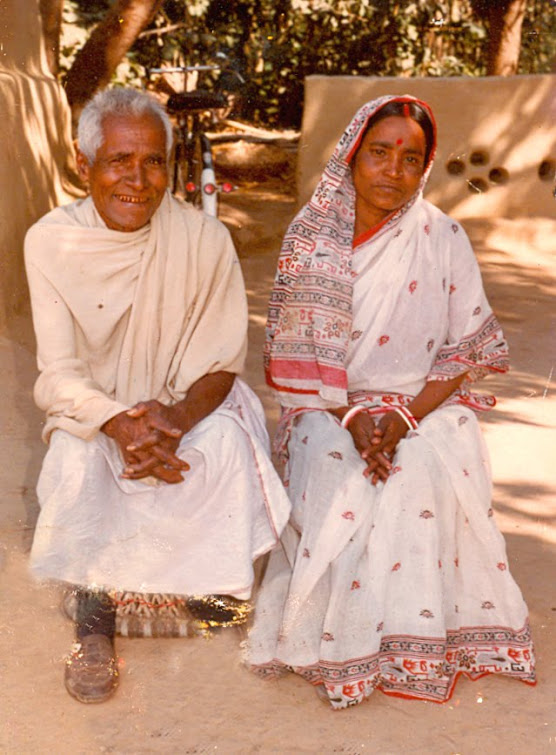
While my Parents Pulin Babu and basanti Devi were living

"The Day India Burned"--A Documentary On Partition Part-1/9

Partition

Partition of India - refugees displaced by the partition

Sunday, March 4, 2012

चीन के साथ छायायुद्ध बजट की तैयारी में सबसे पेचिदा मुद्दा

​चीन के साथ छायायुद्ध बजट की तैयारी में सबसे पेचिदा मुद्दा

भारतीय सेनाध्यक्ष जनरल वीके सिंह ने चीनी रक्षा बजट में दोगुणा इजाफा की खबरों के बीच यह कहकर सनसनी फैला दी कि युद्ध के हालात में भारत के गोला बारुद महज दो दिन में ख्तम हो जाएंगे।

मुंबई से एक्सकैलिबर स्टीवेंस विश्वास
​​
​ चीन के रक्षा बजट के मद्देनजर अगले वित्तमंत्री प्रमव मुखर्जी पर रक्षा बजट बढ़ाने का दबाव है। खुला बाजार में रक्षा बजट में लगातार इजाफा हो रहा है, पर राजकोषीय घाटे में इसकी चर्चा तक नहीं होती क्योंकि यह राष्ट्रीय सुरक्षा और अखंडता ही नहीं बल्कि देशभक्ति से जुड़ा मामला बन​ ​ गया है। चीन के साथ छायायुद्ध में पिछले दिनों खासकर भारत अमेरिकी परमाणु समझौते के बाद रक्षा सौदों की बाढ़ आ गयी है, पर न तो रक्षा विशेषज्ञ और न ही भारतीय सेना प्रतिरक्षा तैयारियों को पर्याप्त मानते हैं। राजकोषीय घाटा, ईंधन संकट और राजनीतिक मजबूरियों के मध्य अगले बजट के लिए चीन के साथ छायायुद्ध पेचीदा मुद्दा बन गया है। भारत में हथियारों का कारोबार लाभदायक धंधा बन जाने से बाजार और कारपोरेट हित भी सीध सीधे जुड़े हुए हैं। रक्षा क्षेत्र में बजट आवंटन बढ़ाने का दबाव रहता है। लेकिन सरकार सीमित रूप से ही बजट बढ़ा सकती है।अब वह सीमा टूटने की आपात स्थिति बनने लगी है। इससे नीति निर्धारकों के कान खड़े हो गये हैं। किसी भी हाल में रक्षा तैयारियों में ​​खामी का मसला आगे बड़ा तो सरकार के लिए जन भावनाओं के नियंत्रित करने की समस्या उठ खड़े होने की आशंका है।

भारतीय सेनाध्यक्ष जनरल वीके सिंह ने चीनी रक्षा बजट में दोगुणा इजाफा की खबरों के बीच यह कहकर सनसनी फैला दी कि युद्ध के हालात में भारत के गोला बारुद महज दो दिन में ख्तम हो जाएंगे। हाल की रक्षा तैयारियों के मद्देनजर जनरल का बयानबाजी टीवी पर प्रसारित होते ही हड़कंप मच गया है।दरअसल एक अंग्रेजी दैनिक में रक्षा मंत्री एके एंटोनी को लिखे पत्र के कुछ अंश छाप जाने के बाद टीवी चैनल ने यह समाचार प्रसारित करके रक्षा बजट के सवाल को आगामी बजट का फोकस बना दिया है।बताया जाता है कि जनरल ने रक्षामंत्री को आगाह किया है कि रक्षा बजट में कटौती होने की हालत में देश की सैनिक तैयारियों को भारी धक्का लग जायेगा। जाहिर हे कि इस खुली चेतावनी के बाद वित्तमंत्री के हाथ बंध गये हैं। ऐसे में बजट से राहत की उद्योग जगत की उम्मीदों के रंग बेरंग होने ही थे।हालांकि पहले ही रक्षा मंत्री प्रणव मुखर्जी ने कहा है कि केन्द्र सरकार देश की रक्षा तैयारियों में प्राइवेट सेक्टर की भूमिका को सुनिश्चित करने की योजनाएं बना रही है।

रक्षा मंत्री एके एंटनी ने हाल में पड़ोसी देश चीन की सैन्य तैयारियों को लेकर गंभीर चिंता जताई थी। । एंटनी ने कहा कि भारत को भी अपनी रक्षा तैयारियों की व्यापक समीक्षा करने और सुरक्षा चुनौतियों के प्रति चौकस रहने की जरूरत है।
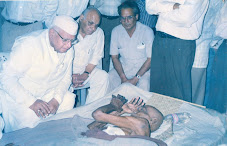
एशिया सुरक्षा सम्मेलन से इतर संवाददाताओं से मुखातिब एंटनी ने कहा, चीन की सेनाओं का आधुनिकीकरण और उसका अब तक का सबसे बड़ा सैन्य बजट गंभीर चिंता का विषय है। लेकिन, हम अनावश्यक रूप से चिंतित नहीं हैं क्योंकि हम भी अपनी सशस्त्र सेनाओं को आधुनिक और मजबूत बनाएंगे। चीन की बढ़ती सैन्य ताकत के बारे में पूछे गए एक सवाल पर एंटनी ने कहा, किसी भी चुनौती से निपटने के लिए हम भी अपनी क्षमताएं बढ़ाएंगे और बुनियादी ढांचा मजबूत करेंगे। हम ऐसा कर भी रहे हैं।

पिछले दिनों खबरें आई थीं कि चीन ने भारत से लगे इलाकों में मिसाइलों की तैनाती की है और वहां अपना सैन्य ढांचा मजबूत कर रहा है। इसके बाद भारत ने भी सीमावर्ती इलाकों में सड़क व हवाई पट्टियां दुरुस्त कीं। चीन से लगे सीमावर्ती राज्यों में भारत लड़ाकू विमान सुखोई-30 एमकेआइ की चार स्क्वाड्रन भी तैनात करने जा रहा है।

रक्षा मंत्री ने कहा, सशस्त्र सेनाओं की क्षमताओं की समीक्षा निरंतर चलने वाली प्रक्रिया है। रक्षा तैयारियों की समीक्षा नियमित तौर पर की जा रही है और यदि कहीं कोई कमी नजर आती है तो उसे तत्काल दूर किया जाएगा।

चीन ने इस बार अपने रक्षा बजट में जबर्दस्त इजाफा किया है। उसने रविवार को ऐलान किया कि वह इस साल डिफेंस सेक्टर में 106.4 अरब डॉलर की बड़ी रकम खर्च करेगा। रक्षा बजट में 11.2 फीसदी का यह इजाफा पड़ोसी देशों समेत बाकी देशों के बीच एशिया-पसिफिक रीजन में उसकी बढ़ती सैन्य ताकत और दबदबे को लेकर चिंता पैदा कर सकती है। एक वैश्विक शोध समूह की मानें तो 2015 तक चीन का कुल रक्षा बजट भारत, जापान और एशिया-प्रशांत क्षेत्र के अन्य 10 देशों के समुचित रक्षा बजट से ज्यादा हो जाएगा। चीन 2015 तक अपनी सुरक्षा योजनाओं पर 238.2 ब‌िलियन डॉलर खर्च करने लगेगा, यानी उसका रक्षा बजट 11,687 अरब 92 करोड़ 90 लाख रूपए का होगा।

देश का रक्षा बजट इस बार दो लाख करोड़ रुपये के आसपास पहुंच सकता है,ऐसी संभावना बतायी जा रही थी। पर अब बदले हुए हालात में यह रकम नाकाफी है। रक्षा बजट पर व्यय बढ़ने का सीधा असर सामाजिक ​​क्षेत्र की योजनाओं पड़ने की आशंका है। शिक्षा और कृषि पर भी गाज गिर सकती है। उम्मीद थी कि तकरीबन 80 हजार करोड़ रुपये सेनाओं के आधुनिकीकरण और हथियारों की खरीद के लिये आवंटित हो सकते हैं। रक्षा मंत्रालय के आधिकारिक सूत्रों ने बताया कि वित्तीय वर्ष 2012-13 के लिए सरकार रक्षा बजट के मद में दो लाख रुपये आवंटित कर सकती है. यह राशि निवर्तमान रक्षा बजट (164415 करोड़ रुपये) की तुलना में तकरीबन 36 हजार करोड़ रुपये अधिक है।इसका मतलब यह हुआ कि रक्षा बजट में इस बार 20 फीसद से अधिक वृद्धि होगी, जो कि अभूतपूर्व कही जाएगी. नए रक्षा बजट में प्राप्त राशि में से तकरीबन 80 हजार करोड़ रुपये सेनाओं के लिए नए साजोसामान, अस्त्र-शस्त्र और रक्षा उपकरणों की खरीद पर खर्च किए जाएंगे।वर्ष 2011-12 यानी कि बीत रहे वित्तीय वर्ष में देश का रक्षा बजट 164,415 करोड़ रुपये का था, जो कि वित्तीय वर्ष 2010-11 में प्राप्त रक्षा बजट 147344 करोड़ रुपये के मुकाबले लगभग 17 हजार करोड़ अधिक रहा. यह वृद्धि पिछले के मुकाबले महज लगभग 10 फीसद ही थी। इस बजट (2011-12) में 69 हजार करोड़ रुपये नए हथियार, रक्षा उपकरण और साजोसामान खरीदने के लिए मिले थे।

गौरतलब है कि दुनिया भर में गहराई आर्थिक मंदी से दुनिया का शायद ही कोई उद्योग बचा हो। आर्थिक मंदी की मार से वहां का यह उद्योग बुरी तरह प्रभावित हुआ है और उसका संकट और भी गहरा गया है। इसलिए इस उद्योग को नए बाजार की तलाश थी और भारत में यह संभावना उसे सबसे ज्यादा दिख रही थी। सारी दुनिया जानती है कि हथियार और पुनर्निर्माण का खेल अमेरिका का सबसे बड़ा व्यापार है। इसके लिए वह अमेरिका ऐसी परिस्थितियां तैयार करता है कि उसके रक्षा उद्योग के उत्पादों की खपत बढ़े और उसके यहां कि हथियार उत्पादक कंपनियां जमकर चांदी काटें। अभी तो वैसे भी मंदी चल रही है और अमेरिका के रक्षा उद्योग को भारत जैसे बड़े बाजार की और भी ज्यादा जरूरत है।

एसोचैम के एक अनुमान के मुताबिक 2012 तक भारत तकरीबन तीस बिलियन डाॅलर के हथियारों का आयात करेगा। इसमें लड़ाकु विमान, हेलीकाप्टर, मिसाइल के अलावा कई तरह के आधुनिक हथियार शामिल हैं। इसमें से भी बड़ा हिस्सा वायु सेना पर खर्च होने वाला है। एसोचैम का यह अध्ययन बताता है कि 2012 तक वायु सेना के लिए 126 लड़ाकु विमान खरीदे जाने वाले हैं। इसके लिए तकरीबन 42 हजार करोड़ रुपए खर्च होने का अनुमान है। जाहिर है, ऐसे में दुनिया के बडे़ हथियार निर्माता इसमें से ज्यादा से ज्यादा हिस्सा हर हथियार निर्माता देश अपने खाते में डालना चाहता है। कुछ दिनों पहले तक रूस भारत में सबसे ज्यादा हथियारों की आपूर्ति करता था लेकिन अब भारत को सबसे ज्यादा हथियार निर्यात करने वाला देश इजरायल बन गया है।

एशिया प्रशान्त में सैन्य मौजूदगी बढ़ाने की अमेरिका की रणनीति के मद्देनजर चीन ने इस वर्ष अपने रक्षा बजट में 11.2 फीसदी की बढोतरी का ऐलान किया है। चीन के रक्षा बजट में बढोतरी को भारत के लिए भी चिंता का विषय माना जा रहा है।

चीन की संसद के प्रवक्ता ली झाओशिंग ने प्रेस कांफ्रेंस में यह घोषणा करते हुए कहा कि उनका देश 11.2 प्रतिशत की बढ़ोतरी के साथ वर्ष 2012 में अपनी सेना पीपुल्स लिबरेशन आर्मी पर 110 अरब डालर का खर्च करेगा। हालांकि पिछले वर्ष उसने अपने रक्षा बजट में 12.7 प्रतिशत की वृद्धि की थी।


कल देश की संसद नेशनल पीपुल्स कांग्रेस के वार्षिक सत्र में इस बजट को मंजूरी दी जाएगी।

झाओशिंग ने कहा 'चीन की 1.3 अरब की आबादी,विशाल क्षेत्रफल और व्यापक तटवर्ती क्षेत्र को देखते हुए अन्य प्रमुख देशों के मुकाबले हमारा रक्षा बजट बहुत कम है।


हालांकि अमेरिका और चीन के पड़ोसी देशों का मानना है कि चीन का असली रक्षा खर्च घोषित बजट से बहुत ज्यादा है। अमेरिका ने कई बार चीन से कहा है कि उसे अपने सैन्य इरादों को अंतरराष्ट्रीय समुदाय के साथ साझा करना चाहिए लेकिन अमेरिका का खुद का रक्षा बजट चीन से कहीं ज्यादा है।

झाओशिंग ने कहा कि वर्ष 2011 में चीन का कुल रक्षा व्यय सकल घरेलू उत्पाद का मात्र 1.28 था जबकि अमेरिका,ब्रिटेन और अन्य प्रमुख देशो का यह अनुपात दो प्रतिशत से भी ज्यादा है। उन्होने कहा कि चीन की सीमित सैन्य क्षमता का मकसद देश की संप्रभुता,राष्ट्रीय सुरक्षा और क्षेत्रीय अखंडता को सुरक्षित रखना है। यह अपने पड़ोसी के लिए किसी तरह का भी खतरा नहीं है।

उन्होंने कहा 'चीन शांतिपूर्ण विकास और आत्मरक्षात्मक राष्ट्रीय रक्षा नीति के मार्ग पर चलने के लिए प्रतिबद्ध है। अमेरिकी राष्ट्रपति बराक ओबामा ने एशिया प्रशान्त क्षेत्न में अपने सहयोगी देशों को आश्वस्त किया है अमेरिका इस क्षेत्र मे शक्ति संतुलन स्थापित करने के लिए प्रमुख भूमिका में रहेगा।'

हालांकि चीन लाख सफाई दे कि उसकी सेना से पड़ोसी को कोई खतरा नहीं है लेकिन पिछले कुछ महीनों से ड्रैगन की गतिविधियां चिंता में डालने वाली हैं। भारत से लगती वास्‍तविक नियंत्रण रेखा (एलओएसी) पर चीनी सैनिकों के अतिक्रमण की खबरें बार बार मीडिया में आती रहती हैं।  
 

--
Palash Biswas
Pl Read:
http://nandigramunited-banga.blogspot.com/

Fwd: Hindus appropriate Buddhist site


---------- Forwarded message ----------
From: Shiva Shankar <sshankar@cmi.ac.in>
Date: Sun, Mar 4, 2012 at 4:48 PM
Subject: Hindus appropriate Buddhist site
To:


"... He claims Banteji has been targeted specifically as he been instrumental in converting over 15,000 Dalits to Buddhism since 1995. ..."


Idol Worship Sparks Buddhist Fury
http://www.tehelka.com/story_main52.asp?filename=Ne100312Idol.asp

Dalit organisations and monks claim that Hindu groups are trying to appropriate a historical Buddhist site in Gulbarga. Imran Khan reports

A HISTORICAL Buddhist site near Gulbarga, 584 km from Bengaluru, where the first inscribed image of Ashoka was discovered, has become the latest communal flashpoint in Karnataka. For the past two weeks, Dalit organisations and a Buddhist monk have been protesting against what they claim is an attempt by Hindus to appropriate the monument by placing a Durga idol.

Four Dalits and a Buddhist monk have been arrested for removing the idol. However, the protesters claim that they had removed the idol only to take it to the deputy commissioner's office when they were arrested.

In 1986, a Buddhist stupa dating back to 1st century BC was discovered in Sannati, around 70 km from Gulbarga. It is believed that Ashoka sent his son Mahindra and daughter Sanghamitra as emissaries to spread Buddhism in this region, which is now considered the most backward district in Karnataka. Subsequent excavations by the Archaeological Survey of India (ASI) have established Sannati as an important historical site.

"On 5 February, a group of Dalits led by a Buddhist monk tried to forcibly take away the Durga idol," says R Vishal, deputy commissioner of Gulbarga city. "The area is a protected monument and ASI is conducting excavations there. When ASI men tried to stop them, they pushed them and ran away. Before the situation could get out of control and communal tension could be created, we caught them. A case has been lodged."

Buddhist monk Bodhidhamma Banteji, who is in judicial custody, says, "A sinister plan has been carried out all over India. Look at the cases of Khaneri, Elephanta and Mahalakshmi in Mumbai and Karla and Mansari in Nasik and Nagpur. Efforts have been made to ascribe a Hindu connection to Buddhist places of worship."

"I have been coming to this place for the past 10 years as part of my dissertation on Sannati. I never found this idol or any Hindu relic at this place. Suddenly we saw rituals taking place and this idol sprouting up," says Banteji.

Banteji and four Dalit leaders have been booked under various IPC sections for promoting enmity between different groups on grounds of religion, intentional insult with intent to provoke breach of peace, unlawful assembly intended to outrage religious feelings. Surprisingly none of the accused have been booked for trespassing, theft or damaging a historical site.

When contacted, DK Ravi, assistant commissioner of Sedam taluk (where the complaint has been lodged) and administrator of Sannati Budhha Stupa Development Authority, refused to comment. The accused allege that the complaint was filed based on Ravi's insistence.

'I couldn't have just sat back and seen Buddhist heritage being destroyed,' says monk Banteji

"When I saw this idol, I immediately informed the local authorities and the district administration. Even after my constant reminders, they didn't take any action. I couldn't have just sat back and watched the cultural heritage of Buddhism being destroyed," says Banteji.

"Look at the absurdity of this case. The complaint has been lodged by a Muslim (ASI worker Azeem) against Buddhists and Dalits for hurting his religious sentiments. Whereas the deity in question is a Hindu idol," says the defendants' lawyer Mazhar Hussain. He claims Banteji has been targeted specifically as he's been instrumental in converting over 15,000 Dalits to Buddhism since 1995.

ASI Deputy Superintendent Dr JK Patnaik rubbishes the claims. He cites a study conducted by ASI in 1989 to prove that the practice of Durga worship was prevalent at the time when the government acquired the place in 2002, and subsequently declared a protected site in 2003. "The idol dates back to the 9th century AD — Rashtrakutas period — and had not been installed there," he says. He admits that ASI is allowing rituals to take place as discontinuing the practice would incur "the wrath of locals".

Local Hindu groups led by BJP MLA Valmiki Nayak have been demanding puja to be allowed at the site. "Twenty years ago, the site belonged to a villager who used to worship Durga. Hence we demanded that puja should be allowed. Those who say that the place only belongs to Buddhists and that this place is only Buddha Vihar are troublemakers," he says.


--
Palash Biswas
Pl Read:
http://nandigramunited-banga.blogspot.com/

Fwd: James Petras: Colombia's Quest for Peace and Justice - The International and National Context


---------- Forwarded message ----------
From: Global Research E-Newsletter <newsletter@globalresearch.ca>
Date: Sun, Mar 4, 2012 at 5:34 PM
Subject: James Petras: Colombia's Quest for Peace and Justice - The International and National Context
To: palashbiswaskl@gmail.com


Having trouble viewing this email?
Click here
http://campaign.r20.constantcontact.com/render?llr=o8b4necab&v=001QGVxMVttOOZf_PqLxFFdtltGr_uLddeiQDa_jE7Ntlec9ppAUK-XeE9kenj9wRwTR_WvGzTC6IRlcnwRDZB3mjAqOWXDY9PUqTeZnzNjofe_yUxmD-2o5Q%3D%3D
Colombia's Quest for Peace and Justice: The International and National Context

By James Petras

Global Research, February 28, 2012

URL of this article: www.globalresearch.ca/index.php?context=va&aid=29529

Introduction


Between April 21 -23, the National Patriotic Council will convoke thousands of activists from most of the major urban and rural social movements and trade  unions, human rights groups and indigenous , afro-colombian  movements, who will meet to unify forces and launch, what promises to be the most significant new political movement in recent history.  United by a common pledge to seek a political solution to over 60 years of armed social conflict, the meeting will decide on a strategy to defeat past and present narco- para political regimes, recuperate land and households for 4 million displaced peasants, Indians, farmers and Afro-Colombians.  Central to the mission of this gathering will be the recovery of national sovereignty, severely compromised by the presence of seven US military bases, the large-scale, long-term takeover by foreign multi-nationals of the country's mineral and energy resources and the protection of indigenous and afro-Colombian communities from environmental depredation.  The April meeting has been proceeded by mass gatherings, organized by popular councils, intent on breaking military, paramilitary and the landlords political machines' control over the electorate.


There is good reason to believe that this political movement will succeed where others failed, in large part because of the width and breadth of the participants, the growing co-operation and unity in common struggles for land reform, participatory democracy, and near universal opposition to US backed militarism and the neo-liberal free trade agreement.


International Perspectives: A Promising Context


Never has the international climate, especially in Latin America, been so favorable for the growth  of Colombia 's popular democratic initiative and the eventual political success of this "movement of movements".


Throughout most of South America and the Caribbean a favorable historic moment ofregional autonomy has taken organizational form, backed by almost all the major countries in the region. ALBA( Bolivarian Alternative for Latin America) links a dozen Caribbean and Andean countries in a pact of regional integration led by the dynamic, democratic, anti-imperialist government of Venezuelan President Hugo Chavez.  UNASUR,(Union of South American Nations) MERCOSUR(Common Southern Market) and other regional organizations, are expressions of the growing political and economic independence of Latin America and a rejection of the US dominated OAS(Organization of American States).  In practical terms, the growth of these independent regional organizations has meant a rejection of US sponsoredmilitary intervention, as illustrated by their repudiation of the Washington backed military coup in Honduras in 2009.  Latin America's opposition to Washington's Free Trade of the America's Agreement led to the growth of intra-regional trade and forced Washington to seek 'bilateral'free trade agreements' with Chile, Colombia, Panama and Mexico.


The growth of autonomous regional integration provides two strategic advantages:  it lessens economic dependence on the US and weakens Washington 's leverage in imposing economic sanctions against any nationalist, populist or socialist government in the region.  This is evident in Washington 's failure to secure any Latin American support for its blockade of Cuba or sanctions against Venezuela .  The decline of US political influence and economic dominance opens a historic opportunity for a popular nationalist and democratic government in Colombia torealistically develop a new alternative development model centered on greater social equity.


The dynamic growth of Asian markets, especially China , provides Latin America with a historic opportunity to diversify its markets, increase trade and secure favorable prices for its exports.  The advantage of  Asian trade relations is that they are not encumbered by subversion by the CIA and the Pentagon – they are based on strictly mutually beneficial economic relations and non-intervention in the internal relations of each country.  The diversification of trade is well advanced:  China has replaced the US and the EU as the principle trading partner of Brazil, Argentina, Chile, Peru and the list is growing as Asia rapidly expands at over 8% and the US-EU economies wallow in recession.


Latin America is no longer subject to the cyclical volatility of US-EU financial markets.  During the financial crises of 2008-2010 of the US and Europe, Latin America was able to turn increasingly to China for financing:  China 's lending to Latin America grew from $1 billion dollars in 2008, to $18 billion in 2009 to $36 billion in 2010.  Moreover, countries like Argentina and Ecuador , which cannot access private capital markets in the US and EU because of debt defaults,can draw loans from Chinese state banks. Between 2005-2010, China lent Latin America $75 billion and by 2010 Chinese loans exceeded the combined loans of the IMF, World Bank and BID.


Moreover, Chinese state banks do not impose harsh political and economic "conditions" to their Latin borrowers as does the IMF.  In other words, Latin Americans intent on external financing, can borrow from China to finance structural changes including agrarian reform and the nationalization of banks without fearing economic reprisals from overseas lenders.


ALBA provides an important 'sub-regional grouping' and a forum  representing a forceful rejection of imperial wars, an opportunity for deeper Caribbean integration and a defense against imperial political and military intervention as well as favorable subsidies on petroleum imports.  ALBA provides Colombia with an opportunity to deepen its strategic ties with Venezuela and Ecuador , as they share a common frontier , highly complementary economies and a common historical and cultural Bolivarian legacy.


In contrast to the period between the late 1970's to 2000 when Washington dominated Latin America via client military and civilian regimes and the neoliberal dogma enshrined in the so called Washington Consensus of 1996,and limited the freedom of action of an independent popular government, today, a free and independent Colombia would have an immensely more favorable international, political and economic environment.


The Decline of US Global Power


US influence is declining on a world scale:  China and India have displaced the US as the major trading partners in Asia, Latin America, Africa and in major countries in the Middle East .  Russia's economy and military has recovered from the catastrophic pillage during the Yeltsin era and is pursuing an independent policy .This is evident in Russia's military sales and petroleum agreements with Venezuela, its UN Security Council veto of the NATO backed mercenary assault of Syria and its closer ties with China.


Along with the emergence of a multi-polar world of Russia-China-Latin America, the Middle East and North Africa is in the midst of a series of anti-imperialist and popular democratic rebellions which threaten US client dictatorships.


Equally important the US's prolonged, costly and losing wars in Iraq and Afghanistan, has been immensely unpopular internally, and along with the fiscal and trade deficit and financial crises, has undermined public support for new large scale ground wars.


In other words the US is much less capable of sustaining a large scale military intervention against a major country like Colombia , if and when a new popular government is elected.


The Demise of the Neo-Liberal Capitalist Model


Today as never before in recent history, real existent "free-market capitalism" has, demonstrated on a world scale its failure to provide the essentials of the good life.  In Greece , Spain , Portugal , Italy youth unemployment hovers between 35% to 50%; and overall unemployment approaches or exceeds 20%. In the EU and the US real unemployment and underemployment exceeds a quarter of the labor force.


Economic recession, financial crises and declining living and working conditions are the defining conditions of the US and Europe .  In other words, the capitalist model in crises for five years offers no alternative for the great majority working in the 'developed imperialist countries' or the so-called "developing countries".


This presents a golden ideological opportunity to demonstrate that a socialist society based on democratic participation is a viable alternative to crises ridden capitalism.


Class and National Struggles:  The Emerging Reality


Throughout the world today, from Southern Europe to the Middle East, from Asia to North America , mass popular revolts, have taken prime of place.  General strikes, mass demonstration and street fighting rage in the capitals of Greece , Portugal and Italy .  Mass democratic movements confront  dictators in Egypt , Tunisia , Bahrain , and the Gulf States .  'Occupy movements' in the US and Spain spread to new countries, rejecting class based "austerity".  In the face of the recovery of profits at the expense of massive cuts in wages, public services, pensions, health care, new middle class sectors join the struggle.


Even in the high growth Asian capitalist countries, like China , the working class rebels against the inequalities and exploitation: over 200,000 strikes and protests in 2011 recall the popular rebellions of the Cultural Revolution against hierarchy and abuse.  In summary the regional and world correlation of forces is very favorable to the emergence of a new dynamic unified political movement in Colombia .  However, there are dangers and obstacles that need to be taken into account.


Obstacles and Challenges


The decline and decay of US power and influence does not lessen the dangers of direct Special Forces assassinations, indirect military  intervention via local military proxies and economic destabilization.


Washington has developed a clandestine army of special forces, armed assassin operations, in 75 countries.  The US retains 750 military bases around the world.  As we saw in Honduras , the US still has leverage over the military and allies among the oligarchs to overthrow a progressive government.  The US has a reserve army of local politicians and NGOs ready to replace established dictators when they are overthrown.


Washington and NATO Europe provided air and naval support and supplied arms to local mercenaries and fundamentalists to overthrow independent leaders like Gadhafi in Libya.Today they provide arms  to mercenaries to assault  President Assad in Syria.  The US and EU are building a military armada surrounding Iran  and promoting economic sanctions to strangle its economy. More ominously Washington is encircling    China and Russia with military bases ,missles and warships.


In other words, imperialism in economic decline still retains military options to deter the advance of a pluralist global political system.  Imperial states do not surrender power unless they face unified regional alliances and, equally important, governments with united mass popular support.


The positive development of Latin American integration is a step toward greater independence but it has strategic weaknesses: namely internal class contradictions and conflicts over development models.  Economic growth and diversification of markets has lessened USdominance but it has also strengthened the power and wealth of the domestic ruling classes and multi-national agro-mineral corporations.


Inequalities of wealth, income and landownership flourish in Brazil , Chile , Peru , Ecuador , Bolivia and elsewhere, even as some of these regimes claim to be "popular governments".  Moreover, the "anti-imperialism" of ALBA countries like Bolivia does not extend to the dozens of foreign owned mineral extracting and petroleum exploiting multi-nationals which dominate the country.  Argentina may promote an independent foreign policy but over one-third of its countryside is owned by foreign capital.


In other words while the growth of independent governments in Latin America contributes to limiting the domination of the US, Colombian movements must also recognize  the limitations and class contradictions of the 'progressive' countries in the region.  Only Venezuela has pursued strong redistributive and nationalist policies.


The principle obstacles facing the new Colombian political movements are domestic:  the entrenched oligarchy and its allies in the state, especially within the military and paramilitary forces.  If the external environment is largely favorable, the internal political regime presents a formidable obstacle, especially the continued assassination of dozens of prominent trade union, peasant and human rights activists.


The de-militarization of civil society beginning with the dismantling of the US military bases, the discontinuation of Plan Colombia and the demobilization of the armed forces (over 300,000 plus private paramilitary gangs) are  major steps toward opening political space for the excrcise of democratic rights.  The democratization of elections requires the termination of the state penetration and coercion of civil society.


The democratization of Colombia requires the growth  of powerful independent social movements representing  all popular  sectors of Colombian society; judicial investigation and prosecution of ex narco-President Álvaro Uribe  and his closest collaborators, for political homicides, needs to extend to the present Santos regime.  The recent "free trade agreement" between Obama and Santos must be repudiated as it  is an obstacle to domestic development and deepening more promising economic relations with Venezuela and the rest of Latin America and Asia.


Above all over 4 million displaced Colombians, forcibly dispossessed by the Uribe regime, must be mobilized to repossess their lands and provided with credit, loans and an opportunity to escape their current misery and squalor.


Colombia 's current rulers cannot point to a single example of a successful neo-liberal model in Europe, Latin America or the United States . Neo-liberal  Mexico and Central America are over-run by drug cartels,with  80,000 plus homicides over the past 5 years and the lowest growth rates in the region.  The US economy stagnates with over 20% un and underemployed.  The European Union is on the verge of disintegration.  Clearly  Marx's critique of growing capitalist immiseration is being confirmed.  It is time for the new political movements to consider a "Colombian road to socialism" built on public ownership of the commanding heights of the economy, agrarian reform,  sustainable agriculture,and environmental protection under democratic control.


It is in this spirit of optimism and critical analysis that I send my solidarity and unconditional support to the organizers, activists and militant participants attending this historic gathering . I am confident  sooner rather then later they will lead Colombia to its "second and final independence".


James Petras latest book on Latin America co-authored with Henry Veltmeyer is Beyond Neoliberalism: A World to Win (Ashgate:Surrey 2011)


Please support Global Research
Global Research relies on the financial support of its readers.


Your endorsement is greatly appreciated

To make sure you don't miss our emails add newsletter@globalresearch.ca to your address book

Forward email
http://ui.constantcontact.com/sa/fwtf.jsp?llr=o8b4necab&m=1101807978350&ea=palashbiswaskl%40gmail.com&a=1109429358615


This email was sent to palashbiswaskl@gmail.com by newsletter@globalresearch.ca.

Update Profile/Email Address
http://visitor.constantcontact.com/do?p=oo&mse=001Y9XAqyV8VF0P5VFIo8dIEvw1A2ipB-2PFVJrBUuy0b0%3D&t=001M_cdmBrawvrlFrf4qCM5rg%3D%3D&l=001FCSs65SMrsI%3D&llr=o8b4necab


Instant removal with SafeUnsubscribe(TM)
http://visitor.constantcontact.com/do?p=un&mse=001Y9XAqyV8VF0P5VFIo8dIEvw1A2ipB-2PFVJrBUuy0b0%3D&t=001M_cdmBrawvrlFrf4qCM5rg%3D%3D&l=001FCSs65SMrsI%3D&llr=o8b4necab


Privacy Policy:
http://ui.constantcontact.com/roving/CCPrivacyPolicy.jsp


Online Marketing by
Constant Contact(R)
www.constantcontact.com


GLOBAL RESEARCH | PO Box 55019 | 11 Notre-Dame Ouest | Montreal | QC | H2Y 4A7 | Canada


--
Palash Biswas
Pl Read:
http://nandigramunited-banga.blogspot.com/

Fwd: हस्तक्षेप.कॉम सपा में शुरू हुई ‘कौन बनेगा मुख्यमंत्री’ की जंग


---------- Forwarded message ----------
From: Amalendu Upadhyaya <amalendu.upadhyay@gmail.com>
Date: 2012/3/4
Subject: हस्तक्षेप.कॉम सपा में शुरू हुई 'कौन बनेगा मुख्यमंत्री' की जंग
To: hastakshep@googlegroups.com


Recent Post


--
  [image: Welcome To Hastakshep] <http://hastakshep.com/>

राजनैतिक, आर्थिक, संस्कृतिक मुद्दो और आम आदमी के सवालो पर सार्थक *हस्तक्षेप* के
लिये देखें
http://hastakshep.com/


http://www.facebook.com/amalendu.a

http://www.facebook.com/pages/hastakshepcom/103260829737800


https://plus.google.com/u/0/b/106483938920875310181/


--
आपको यह संदेश इसलिए प्राप्त हुआ क्योंकि आपने Google समूह "हस्तक्षेप.कॉम" समूह की सदस्यता ली है.
इस समूह में पोस्ट करने के लिए, hastakshep@googlegroups.com को ईमेल भेजें.
इस समूह से सदस्यता समाप्त करने के लिए, hastakshep+unsubscribe@googlegroups.com को ईमेल करें.
और विकल्पों के लिए, http://groups.google.com/group/hastakshep?hl=hi पर इस समूह पर जाएं.


--
Palash Biswas
Pl Read:
http://nandigramunited-banga.blogspot.com/

Assam government’s actions in starvation deaths are inadequate and misleading

Assam government's actions in starvation deaths are inadequate and misleading


After the Barak Human Rights Protection Committee (BHRPC) reported hunger deaths in a tea garden in Assam the state government has taken some actions, though they are inadequate and some of them are even misleading.

The BHRPC reported ( to see the reports click here and here) that 12 people died due to starvation, malnutrition and lack of medical care in the Bhuvan Valley Tea Estate in Cachar district since the owners closed down the estate on 8 October, 2011 and abandoned the labourers without paying their wages, bonus, provident fund dues and other benefits stipulated in the Plantation Labour Act, 1951. The government welfare schemes including the National Rural Employment Guarantee Act, 2005 and Integrated Child Development Scheme as well as the Supreme Court directives issued in the Peoples Union for Civil Liberties (PUCL) vs Union of India & Others or Writ Petition (Civil) 196 of 2001 which is also known as the right to food case not implemented properly.

The actions that have been taken by the government include 1. making the owners to reopen the garden on 9 February, 2012 after 4 months, 2. making the owners to pay a part of the due wages/salary and bonus, 3. a magisterial inquiry into the causes of some deaths, 4. making the owners to increase the wages a little and 5. forming one man inquiry committee to find out the factors that led to the deaths:

1. It is true that the garden has been reopened on 9 February at the instance of the district administration. However, the owners have not yet appointed a permanent manager to run the tea estate. No qualified and permanent doctor and nurse have been appointed in the NRHM run garden hospital. There is also no electricity and water available. There is only an ASHA, a pharmacist and a lab boy in the hospital. Health conditions of 43 people are bad who have not yet received any medical attention.

The rationing of some staple food has also been started. However, according to the labourers, both the quality and quantity of the food items supplied are not up to the mark.

The factory is yet to be opened.

2. Only 50% of the outstanding wages has been paid and bonus for the year 2011 has been paid. According information, bonus for the year 2010 and 2009 are still outstanding along with remaining 50% of wages. Owners are yet to deposit their part of provident fund. Since the labourers incurred debt during the period of the closure after repayment of these debts they are not in position to spend towards medical treatment.

The labourers also told that since 2000 the owners have never constructed and repaired any dwelling house of the labourers. We have seen them living in dilapidated huts falling far below the requirements of the adequate housing within the meaning of the right to adequate housing.

3. A magisterial inquiry into the causes of some deaths was conducted. The inquiry concluded that these deaths have taken place due to causes other than that of starvation. It appears that the methodology of the inquiry has been asking a question and recording a reply without any independent witness. The BHRPC is constraint to say that this method does not stand much credibility.

It also appears that there is a lack of clarity in the sense of the terms starvation, malnutrition and death caused by them as used in the inquiry report. The BHRPC has relied on the definitions of starvation and malnutrition as given in the National Food Security Bill drafted by the National Advisory Council. There are some guidelines for investigation of starvation deaths prepared following relevant protocols of the World Health Organisation and other UN bodies. One such protocol is prepared by the Supreme Court Commissioners on the right to food. According to these guidelines, the modes of death and causes of death as well as various types of causes need to be separated to find out the actual cause of death.

Circumstantial evidences strongly suggest that underlying or contributory causes of all the deaths are starvation and malnutrition. There is no other explanation of the unusually high rate of death in this particular garden in this particular period. It is as if there is a steady continuous spell of death that even awaits the living.

More over, it is reported that the government admitted that for last 20 years the garden was not running properly and the Plantation Labour Act, 1951 was not followed and this led to the abject poverty of the labourers.

4. It is reported that a new wage structure for labourers of tea gardens of Barak valley was announced. According to this structure, effective from 1 January, 2012, the wage is fixed Rs 68 per day for one year. From 1 January, 2013, the daily wage would be Rs 72 and from 1 January, 2014, it would be Rs 75 per day. But the payment of the 50% outstanding wages that was made to the labourers of the Bhuvan valley tea garden is at rate of Rs 50 per day, instead of Rs 68. On the other hand, the labourers of the tea garden of Brahmaputra Valley in Assam are paid Rs 75 and their counterparts in Paschimbanga (West Bengal) are paid Rs 85 per day. This discrimination has no reasonable basis and in violation of equality clause of the Constitution of India as well as the norms of equal pay for equal works. The wages of tea labourers of Assam should be same for the time being, though the labourers are demanding Rs 100 per day at the minimum for a long time.

5. A one man inquiry committee of additional chief secretary Mr. P K Choudhury to find out the factors that led to hunger deaths and fix the responsibility. However, the Supreme Court of India has held that the chief secretary of the state is responsible for every starvation death that takes place in his state. An inquiry by a person who is a part of the state administration to determine whether these were starvation deaths or not falls within the prohibition of "nemo debet esse judex in propia causa"—no one should be judge in his own cause and this is a universally recognized rule of natural justice.

More over, right to truth and justice is a collective right of the people. Therefore, they must appear to have been rendered.

In view of the above and the assurance of the Chief Minister that he will spare no effort to ensure protection of human rights of every citizen and prevention of starvation deaths, the BHRPC is very hopeful and with lots of hope it suggests that:

A. The authorities should provide urgent relief to the tea workers in terms of food supply and medical treatment to prevent further deaths and deterioration of health conditions of sick workers and their dependents.

B. The authorities should conduct a prompt, impartial and objective inquiry into the situation of the garden to fix responsibility for the deaths and the conditions that led to this situation including corruption in implementation of government welfare schemes and non-adherence to the provisions of the Plantation Labour Act and other laws applicable in the estate management by an independent commission of inquiry headed by a sitting or retired judge of a high court or the supreme court and comprising of, among others, medical experts, nutrition experts, labour rights and human rights experts.

C. The officials or other persons who would be found negligent and derelict in their legal duties and responsibilities that directly contributed to the developing of the situation that led to the deaths should be prosecuted according to law.

D. The kin and the dependent of the deceased person should be provided with adequate reparation so far money can provide.

E. The authorities should ensure that all outstanding dues of the labourers are paid immediately and the wages of the all tea labourers ofAssammade equal for the time being and that the tea gardens are run according to the laws providing all rights and benefits to the labourers under the laws.

In sum, the BHRPC would also like to see assumption of some moral responsibility for these calamitious circumstances of death under conditions of hunger and malnutrition, instead of a mere legalistic standpoint. We expect that the Govt. at the state and the Centre should speak the truth and does not issue mere denials in a circumlocutory fashion. In this situation of famished deaths, "ought" is more important than "is".

3 March 2012, Guwahati

-- 
W A Laskar 
Barak Human Rights Protection Committee,
http://bhrpc.wordpress.com 
15, Panjabari Road, Darandha, Six Mile, 
Guwahati-781037, Assam, India 
Cell: +919401942234

CIA-Iran's revolution to incite Soviet Muslims-Afghan Jihad

The revolution in Iran sent Pentagon planners and the CIA scrambling to calculate its impact on allies in the region. Saudi Arabia, with its small population, and its oil producing region, dominated by the Shias, was the most vulnerable.

But others saw an opportunity, that it could inspire the Soviet Union's Muslim republics. The twin Islamic movements in Iran and Afghanistan persuaded the Reagan team to pursue the Islam in Asia theme aggressively. Until Afghanistan, Islam was a bulwark, now it was a sword against Soviet expansion. It signaled a significant escalation in the policy of cooperating with the Brothers and other elements of political Islam.

Afghan jihad empowered political Islam's most radical fringe. It also created a battle hardened cadre of skilled guerilla fighters. It vastly strengthened the international bonds tying Islamists all over the world.

In 1980s Islamists seized control of Afghanistan and the Sudan, and held power in Saudi Arabia and Pakistan, and threatened Egypt and Algeria. Foundation for Al-Qaida was laid at the time.

The Afghan Jihad energized what had till the 1980s, been a neo-conservative pipe dream of military occupation of the oil producing Persian Gulf. There is a direct link between the wars in Afghanistan and Iraq and the current US military presence in oil rich Central Asia. It began in 1980s, when the Jihadis took US, Chinese, Israeli weapons to fight the Red army and continued to 1990s, when the US cooperated with the Taliban. 9/11 facilitated further massive US penetration of the newly independent Muslim Central Asian countries.

It led to new military relationship with Egypt, Saudi Arabia and Pakistan, and creation of the Rapid Deployment force, and the establishment of the Central US command. In January 1980 Carter had proclaimed what came to be called " the Carter Doctrine" which was a forceful restatement of US claims to the Persian gulf by Roosevelt (1943), and Eisenhower (1957, that "…any attempt by any outside power to gain control of the Persian Gulf…regarded …an assault on…vital interests of the US"

At the time, it was mostly bravado. The US did not even have token forces in the Gulf. Soviet Union's reluctant move into Afghanistan was a last ditch defensive action against the US and Pakistan inspired Afghan Islamist provocateur threat against it.

There had been talk of US invasion of Saudi Arabia and occupation of its oil fields since mid-1970s oil embargo imposed by OPEC in 1973. In 1975, Kissinger wrote an anonymous article using the pseudonym Miles Ignotus in Harper's, headlined, "Seizing Arab oil( Saudi Arabia pledged investment of all its oil income in NY, so was not attacked). Kissinger summoned a CIA executive heading out to the Middle East, "We have to teach Saudi Arabia a lesson. Pick one of those sheikhdoms…and overthrow the government…".

Carter ordered creation of RDF, Reagan would expand it into the Central command.

In the 1970s several factors combined to give a stronger hand to those who had for years, sought to play the Islam card against Moscow. Muslim population of Soviet Central Asia was growing far more rapidly than the population of other soviet republics. The revolution in Iran catapulted militant Islam to the forefront. The pro-soviet regime in Afghanistan seemed particularly vulnerable.

In 1960s,  Brzezinski joined the ranks of those calling for greater support of Central Asian Muslims. He was a militant ant-communist. Gates, the then CIA director wrote, "B… was deeply interested in exploiting soviet nationalities problem.

B and Co were the acolytes of Alexandre Bennigen, a European academic with aristocratic Russian roots. He initially went to Paris, then to the University of Chicago, and wrote many books and articles on Islam in Central Asia which fostered a movement among scholars and officials who believed in the viability of the Islamic card.

In The Islamic Threat to The Soviet State, he claimed that the movement harked back to "armed religious resistance…began in the late 18th century…spearheaded by…

Sufi brotherhoods (tareeqa), and opposed Russian imperial presence.

The most significant society, according to him was the secret Naqshbandiya, a Freemason style fraternity closely tied to turkey, "…have a long tradition of "Holy War" against Russians. US effort to encourage political Islam to revolt…would be"…comparable to…Islamic Revolution in Iran.

            By toppling the Shah, Khomeini had rewritten the rules. After the soviet intrusion into Afghanistan in December 1979, Zalmay Khalilzad, a neo-conservative analyst and RAND strategist, and future US diplomat wrote a paper. " the Khomeini regime also poses risks to the Soviets…has encouraged similar movements in Iraq…might even affect Soviet Muslim.

Referring to Shamil, the 19th century Muslim resistance leader, who had opposed Russian expansion in Asia, Henze, a former CIA station chief in turkey wrote, "…be extremely difficult for the Soviet Union… to continue their pro-Arab "anti-colonial policy"…without running the risk of  provoking …Central Asian peoples…".

The trio of Bennigsen, B and Henze joined forces with Richard Pipes, who wrote "The entire…Central Asia…may well tend to move…in the direction of independent statehood…". Under Reagan, Pipes assumed chairmanship of the nationalities working Group.

No such anti-soviet Muslim revolt emerged in Central Asia, but America's support did aid extremist Islamist groups in Chechnya, Uzbekistan and other countries of the region.

Long before 1979, in fact America's connection to the Brotherhood-linked Islamists began in 1950s, and US support for Islamist political right began in 1973. The CIA sent a team through the offices of Asia Foundation, which was a CIA front organization in the 1950-50s. the organization helped the Islamic Research Institute in Lahore, and helped it publish the encyclopedia of Islam. The students were target number one. The Foundation established relations with the Mujaddidi family in Afghanistan.

The version of Islam that prevailed in Afghanistan, until the 1960s, was not political Islam. But under the influence of the Brothers and Pakistan's Jamaat e Islami, Afghan Islam became politicized and militantly anti-communist. The origin. According to Oliver Roy, a French Orientalist, began with a semi-secret clique called "the professors" who had studied at Al-Azhar, led by Professor Gholam Muhammad Niyazi of the theology faculty of Kabul university and a major CIA beneficiary through the Asia Foundation. In 1972, according to declassified US embassy documents, that a member of the Muslim youth led by Niyazi, met a US official several times and described his activities, including the murder of four leftists, and asked funds to buy a printing press.

In 1958, the movement coalesced and clashed with Muhammad Daoud, the king's cousin and future president. It called itself the Islamic Society.

By mid-1960s the Society was following in the foot steps of its Arab and Pakistani counterparts, and started assaulting left wing and communist students.

Among the leaders of the Islamist movement in Afghanistan were Abdul Rauf Sayaf affliliated with the Brothers, and Burhanuddin Rabbani and Gulbuddin Hikmatyar.

In 1973, Daoud, with the help of communists, toppled the king and established a republic.

The CIA, and Pakistan, first under Bhutto, later under Zia, and the Shah of Iran, made zealous efforts to undermine the new Afghan government. Later the government admitted its role, with the full complicity of CIA, "PM Benazir's special assistant Nasirullah Babar…in a press interview in April 1989…the US had been financing Afghan dissidents since 1973…had taken… Hekmatyar under its wing.

Diego Cordovez and Selig Harrison, drawing on the released Soviet archives, " …Beginning in 1974, the Shah launched a determined effort to draw Kabul into…security sphere embracing India, Pakistan and Persian Gulf states…the US actively encouraged…" (29). "SAVAK and CIA worked hand in hand with Afghan fundamentalists who were linked with the Brothers and the Muslim world League…while Pakistan's ISI helped coordinate raids on Afghanistan".

Though in 1975, Afghan's Islamists felt they had enough power to launch a rebellion against Daoud, "What went almost unnoticed in the excitement of Pakistani involvement…was that Daoud was putting down a manifestation of "International" Islam…and it was the Brothers who, as the larger group,  …entered an agreement with Pakistan's ISI chief General Jillani.

Daoud, under pressure from the US, Iran and Pakistan began to tilt to the right, met the shah and Bhutto, and started installing right wing officers in key posts. His power base was reduced to a small ultraconservative clique, and according to Cordovez and Harrison, the real power behind the scene, was wielded by SAVAK, the Brotherhood, and the World Muslim league.

In April 1978, Noor Mohammad Taraki, staged a coup, and the Islamists supported by ISI, carried out a Pol Pot style campaign of terrorism, assassinating hundreds of teachers and civil servants.

The US was well aware of the terrorism.

Pakistan's ties with the Islamist terrorists grew stronger. Zia established a regime based on 'Islamic law', and promoted Maududi's Jamaat e Islami.

Bzezinski gave an interview to La Nouvel Observateur in 1998, "…CIA aid to Mujahidin started…after the Soviet army invaded Iran on December, 24 1980…but the reality…is completely otherwise…it was July 3, 1979, that…Carter signed the first directive for secret aid.

The Afghan holy war began not in 1980, after the soviet troops crossed the border…, but in 1978, when the Islamists began a…uprising with ISI support. During the time the US maintained relations with the Iranian government of Barzagan,…providing intelligence about the USSR and Iraq…, till the seizure of the US embassy in December, 1979.

According to Gates, the CIA had…Afghanistan…to replace listening posts in Iran. The CIA contacted Saudi Arabia and Pakistan about providing aid to Afghan rebels. In the interview mentioned above, Brzezinski had admitted that his intention had all along been to provoke a Soviet invasion of Afghanistan…Now he told Carter in 1979, "We can give the USSR its Vietnam,,,".

Steve Coll wrote in his Ghost Wars, Zia sought and obtained political control over the CIA's weapons and money…". Saudi Arabia agreed to match US contributions…dollar for dollar. Saudi aid came with strings. The growth of Islamism in Pakistan was directly tied to Saudi aid to Islamabad.

For Pakistan, it was Hekmetyar. By all accounts, he was responsible for throwing acid in the faces of Afghan women who failed to cover themselves properly.

Hekmetyar's specialty was skinning prisoners alive. Sibghatullah Mujaddidi called him a true monster. But representative Charles Wilson, a Texas Republican who was the leading congressional advocate for the Afghan jihad, approvingly noted that Zia was "totally committed to Hekmetyar, because Zia saw the world as a conflict between Muslims and Hindus, and he thought he could count on Hekmetyar to work for a pan-Islamic entity that could stand up to India".

As the war evolved, Abdul Rasul Sayaf, the Afghan Muslim brotherhood leader and Hekmetyar as the Afghan leaders closest to the legions pf foreign, mostly Arab fighters who flocked  to Afghanistan to join the jihad.  By the end of 1980s, it would be the so called "Arab Afghans" who would graduate to become leaders of the militant and terrorist Islamists from Egypt to Chechnya. Both Sayaf and Hekmetyar were close to Osama bin Laden, whose rise to prominence began as early as 1979-80, when he enlisted in the Afghan jihad. "Once in Pakistani exile, Hekmetyar gathered around him the most radical, anti-western Islamists…including bin laden".


Dr. S. Akhtar Ehtisham
(607) 776-3336
P.O. Box 469,
Bath NY 14810
USA
Blog syedehtisham.blogspot.com
All religions try to take over the establishment and if they fail, they collaborate with it, be it feudal or capitalist.

__._,_.___

Dalit man charred to death inside Silchar shop

Dalits Media Watch

News Updates 29.02.12


Dalit man charred to death inside Silchar shop - The Times Of India

http://timesofindia.indiatimes.com/city/guwahati/Dalit-man-charred-to-death-inside-Silchar-shop/articleshow/12078433.cms

Dalit girl raped in UP - Zee News

http://zeenews.india.com/news/uttar-pradesh/dalit-girl-raped-in-up_761316.html

Controversy erupts over dalit's suicide - The Times Of India

http://timesofindia.indiatimes.com/city/kozhikode/Controversy-erupts-over-dalits-suicide/articleshow/12077788.cms

SP leader booked under SC/ST Act - One India News

http://news.oneindia.in/2012/02/29/sp-leader-booked-under-sc-st-act.html

Dalit discrimination on rise in state since 2005: Thorat - The Indian Express

http://www.indianexpress.com/news/dalit-discrimination-on-rise-in-state-since-2005-thorat/918091/0

Relief for Govt govt as SC stays HC order in contempt case - The Times Of India

http://timesofindia.indiatimes.com/city/jaipur/Relief-for-Govt-govt-as-SC-stays-HC-order-in-contempt-case/articleshow/12076059.cms


The Times Of India


Dalit man charred to death inside Silchar shop

http://timesofindia.indiatimes.com/city/guwahati/Dalit-man-charred-to-death-inside-Silchar-shop/articleshow/12078433.cms


TNN | Feb 29, 2012, 06.53AM IST

SILCHAR: A man was charred to death at Gangapur village on Monday night when the shop inside which he was sleeping caught fire.


Like other days, Chunilal Rabidas (34), a Dalit, was sleeping inside his shop, while his wife and three children were at home on Monday night. Suddenly at 11 pm, villagers noticed that the store was in flames. They rushed to the spot and tried to douse the flames by pouring water. But by then, the shop was gutted.


A number of villagers, as well as members of Chunilal's family present on the spot, on Tuesday alleged that some miscreants poured petrol on the shop and then torched it which led to the death of Chunilal. However, no FIR has been lodged so far.


Silchar police station OC said police rushed to the spot and recovered the body, which was sent to Silchar Medical College Hospital for autopsy. He added that a probe has been launched and it is yet to be ascertained weather it was the handiwork of miscreants or an accident.


However, the village, dominated by Dalits, is tense because of the incident.


In a separate case, police rounded up two persons on Tuesday in connection with the brutal murder of Biswanath Goala (50) and his son, Bishal (23), inside their house at Merua Grant village near Silchar on February 22. Another person was wounded in the attack.


The arrested have been identified as Mati Ghatwar and Shyam Ghatwar. The duo was Biswanath's neighbours. They are being interrogated in Silchar police station.


Zee News


Dalit girl raped in UP

http://zeenews.india.com/news/uttar-pradesh/dalit-girl-raped-in-up_761316.html


Last Updated: Wednesday, February 29, 2012, 13:13

Gonda: A dalit girl was allegedly held captive and raped by two youths in Khargupur area here, police said on Wednesday.


The victim was allegedly abducted on February 25 evening and raped by two youths, Deputy Superintendent of Police Vinod Kumar Pandey said today.


She was also held captive for three days, her family alleged in the FIR registered yesterday.


He said that the complainant has named fathers of two accused in the FIR of which one has been detained and interrogated. PTI


The Times Of India


Controversy erupts over dalit's suicide

http://timesofindia.indiatimes.com/city/kozhikode/Controversy-erupts-over-dalits-suicide/articleshow/12077788.cms


TNN | Feb 29, 2012, 05.32AM IST

KOZHIKODE: The suicide of a dalit Babu alias Preaman (40) in Koyilandy on February 25 is gradually snowballing into a controversy. A joint action committee will be formed on Wednesday to demand a probe into the incident that led Babu to end his life.


People in the region say that he was beaten up by a group of 20-odd people when he visited the house of a woman near Kuravangad Central Upper Primary School in Koyilandy on February 24. It is alleged that he was thrashed and labelled as a thief before he was handed over to Koyilandy police. Apparently the miscreants also shot the entire incident on mobile camera and uploaded it on Youtube.


According to A Rajesh, a close friend and neighbour of Babu, though he was let off by the police, he was upset over the incident.


"We saw the video clippings and have identified the group who bet him up," he said. Rajesh said that Babu was stripped and his hands were tied to his back. Babu, a jeep driver by profession, is survived by his mother, wife, grandmother and a four year-old daughter. He was the member of the Koyilandy Taxi drivers union affiliated to CITU.


The police have registered a case under section 174 (unnatural death) of CrPC. Circle inspector P Haridasan said the probe is in the initial stage and a case could be registered under section 306 (abetment of suicide) of IPC.


The cops have sized the cell phones of Babu and the woman whose house he had visited. It has been handed over to the cyber cell. However, no arrest has been registered so far.


One India News


SP leader booked under SC/ST Act

http://news.oneindia.in/2012/02/29/sp-leader-booked-under-sc-st-act.html


Wednesday, February 29, 2012, 1:15 [IST]

Bulandshahr, Feb 28: SP leader Guddu Pandit was today booked under SC/ST Act for allegedly using derogatory remarks and threatening the husband of a block head officer in Dibai Assembly seat, police said.


"A case has been registered against SP leader Guddu Pandit under SC/ST Act today," SSP R K S Rathore said.


Apparently he had threatened and used derogatory words against Bhupendra Singh, husband of Baanpur block head, in Jalalpur village, he said. Several BSP supporters later took out a march to the police station and a complaint was registered against the leader. PTI


The Indian Express


Dalit discrimination on rise in state since 2005: Thorat

http://www.indianexpress.com/news/dalit-discrimination-on-rise-in-state-since-2005-thorat/918091/0


Express news service : Mumbai, Wed Feb 29 2012, 02:42 hrs


Discrimination of Dalits is rampant in Maharashtra even though the state has been a pioneer in civil rights' protection. The number of cases registered under the SC and ST (Prevention of Atrocities) Act, 1989, has been on a rise since 2005, said Prof Sukhadeo Thorat, chairman of the Indian Council of Social Science Research.


He was speaking on 'Discrimination, Atrocities and the Dalit experience of hope and despair in Maharashtra' at the A R Desai Memorial Lecture in Mumbai University's Kalina campus on Monday.  


Thorat said incidents such as the Khairlanji killings and more recently the alleged humiliation of Dalits in Satara district are "disturbing and surprising" as Maharashtra has been a pioneer in civil rights' protection. "I have been a victim of discrimination," said Thorat, also the former chairman of the University Grants Commission.


He said the number of registered cases under Atrocities Act in Maharashtra vary from 141 (minimum) in 1998 to 370 (maximum) in 2007. The number increased from 219 in 2004 to 350 in 2006, 370 in 2007 and 334 in 2008. "Punitive measures don't seem to discourage upper castes to refrain from caste-related atrocities. These data, however, don't indicate the real magnitude of the problem as untouchables generally make use of the Act only in cases that are severe or those which attract public attention. Also, official data doesn't indicate the form/nature of violent methods used," he said.


He said analysis of the number of cases registered under the Protection of Civil Rights Act, 1955, from 1994 to 2008 in Maharashtra shows that an average of 140 cases were registered yearly. The number was highest at 398 in 1994, but reduced to 135 in 1999, 98 in 2000 and 20 in 2008. "There has been a steady decline. It could be interpreted either as untouchability is declining or that untouchables don't desire to register cases as they may not get adequate justice," he said.


Thorat said while laws have brought in positive changes, complete exclusion and discrimination against Dalits or untouchables still exist in many spheres. He said all steps to tackle discrimination have been victim-focused. "We also need to target our policies at those who practise untouchability and change their beliefs/norms/ideologies. Social reform programmes should be dual in nature. Interpersonal behaviour and family are predominant sources of discrimination, children pick up values from family and society and we need to target them," said Thorat.


He said children must be sensitised outside family and the Maharashtra government must look at introducing a component in the curriculum that teaches problems of caste/gender bias. "We never teach children to deny discrimination. How many studies and empirical data have been generated by Mumbai University on this issue? Each instrument of social mobility must be used to teach that discrimination is wrong. Why can't political parties make it their agenda? Political, cultural and religious forums/functions can be used as instruments of change. The state can set up a committee to look into problems of caste, gender and come out with solutions," he said. Thorat proposed introducing ministry of social reforms within the state's social justice department.


Rajpal Hande, director of Board of College and University Development (BCUD), Mumbai University, suggested that the faculty of arts can develop a foundation course on societal problems like discrimination, which can be implemented by the university.


The Times Of India


Relief for Govt govt as SC stays HC order in contempt case

http://timesofindia.indiatimes.com/city/jaipur/Relief-for-Govt-govt-as-SC-stays-HC-order-in-contempt-case/articleshow/12076059.cms


TNN | Feb 29, 2012, 01.49AM IST

JAIPUR: The Ashok Gehlot government was saved from an embarrassment on Monday when the Supreme Court stayed the Rajasthan High Court's last week order wherein the state's two top bureaucrats were held guilty of "willful contempt of the court" in the quota in promotions case.


The high court was to award punishment to chief secretary Salauddin Ahmed and principal secretary (personnel) Khemraj in the afternoon. However, in the morning, the apex court stayed the high court's proceedings till March 20.


At the same time, the top court also stayed execution of the notification issued on September 11, 2011 that the state government had been citing as compliance of the high court order of February 5, 2010, which led to the contempt proceedings.


After this, the high court also deferred hearing in the matter till March 26 and directed the state government to submit before it the apex court's stay order of Monday on oath by then.


The case pertains to the legal dispute on the quota in promotions constitutionally allowed to state government employees belonging to the Scheduled Castes (SC) and the Scheduled Tribes (ST). Even as the non-reserved categories employees, including those from the Other Backward Classes ( OBC) category, opposed the quota alleging that the apex court guidelines were not adhered to, in doing so, the state government reasoned how it has now fulfilled all the legal requirements in granting the benefit to the SC/ST employees.


A division bench of Justice NK Jain and Justice RS Rathore, however, rejected the state government's plea that it has abided by the high court order of February 2010 by gathering the quantifiable data through the Bhatnagar committee to support the quota for SC/ST employees and, thereafter, issuing the notification of September 11, 2011. The Samata Andolan Samiti, one Bajrang Lal Sharma and others, on other hand, moved contempt petition and alleged that the government attempted to "overreach" the February 2010 judgment by forming the Bhatnagar committee and issuing the notification that would protect the "illegally promoted" SC/ST employees. The Samiti reasoned before the apex court that as compliance of the high court judgment, the state government ought to have issued revised seniority lists of its employees from April 1, 1997.


The high court had summoned chief secretary Ahmed and principal secretary Khemraj at 2 pm on Monday to hear the punishment for contempt. But, on the basis of a special leave petition moved by the state government against the high court's contempt order, the Supreme Court intervened and stayed the proceedings.


-- 
.Arun Khote
On behalf of
Dalits Media Watch Team
(An initiative of "Peoples Media Advocacy & Resource Centre-PMARC")
...................................................................
Peoples Media Advocacy & Resource Centre- PMARC has been initiated with the support from group of senior journalists, social activists, academics and  intellectuals from Dalit and civil society to advocate and facilitate Dalits issues in the mainstream media. To create proper & adequate space with the Dalit perspective in the mainstream media national/ International on Dalit issues is primary objective of the PMARC.